



Dior Sauvage Extrait: icy licorice, warm civet, and synthetics at the limit
The author of this article is a renowned fragrance expert with over a decade of experience in the industry. With a passion for fragrances and a discerning palate, the author has written extensively on the art of perfumery for various publications.
There are fragrances you can break down into notes in five minutes. And there are those that resist analysis like wild animals. Dior Sauvage Extrait is from the second category. It's not just another flanker, but an independent statement built from contradictions.
At first whiff, it seems like we have the familiar Elixir before us. But a moment later, the nose understands: this is a different world. Icy licorice, camphor cold, greenery, and a dense synthetic texture. Inside this formula live contrasts rarely found in commercial perfumery.
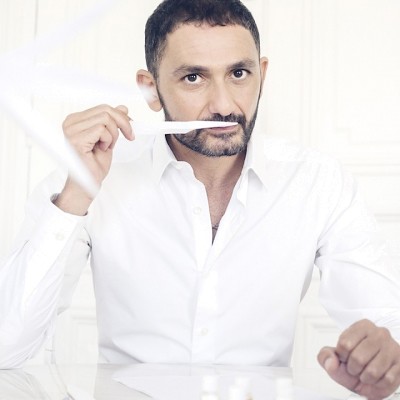
Perfumer François Kurkdjian has created something that sounds like a feature film. Wide, explosive, bold. Synthetic notes here are not a cheap trick but a tool for creating volume and unexpected textures. That's exactly what we'll talk about.
What's the Rebellion? Getting to Know Sauvage Extrait
At first glance, it's easy to mistake Sauvage Extrait for Elixir. The same coordinates, the same recognizable structure. But look closer, and the difference is enormous. Elixir is like a black sea slowly building toward a storm. Extrait sounds like wind at full force and waves at the peak of a spray. It's quick, fierce, throwing everything at you at once.
There is something apocalyptic about this fragrance. Not in the sense of the end of the world, but in the sense of the limit of sensations. The formula is overloaded with details, yet it doesn't fall apart. On the contrary, each element holds the overall framework like a string on a guitar. This is not just a perfume; it's an experience.
From Elixir to Extrait: Evolution or Breakdown?
Kurkdjian has clearly pushed further. Elixir was dark, heavy, and somewhat bulky. Extrait is lighter in movement but tougher in tone. If Elixir is molasses over charcoal, Extrait is licorice seized by ice and transformed into glass. It doesn't melt—it explodes on the palate.
The difference is visible even in the details. Extrait is more medicinal, camphoraceous, green. Isobutylquinoline plays an important role here, adding sharpness and bitterness. It is responsible for the fragrance coming across as fresh but with a metallic edge. This is not ordinary freshness; it's almost sterile.
| Parameter | Elixir | Extrait |
|---|---|---|
| Character | Dark, heavy | Light, swift |
| Licorice | Molten, resinous | Icy, glassy |
| Freshness | Spicy, warm | Camphorous, sterile |
| Perception | A storm is approaching | Wind in your face |
Such a difference in approach makes Extrait a standalone creation. It's not an evolution of Elixir, but rather its mirror image. The same skeleton, but a different heart and different muscles.
Icy Licorice: Why This Isn't Elixir 2.0
When people talk about Sauvage, they immediately think of Elixir. But Extrait exists in a different universe. While Elixir presses with sheer mass, Extrait strikes with speed. Here, licorice isn't dark and resinous — it's caught in frost. You can hear its crunch even in the base.
The opening is like a lightning strike. A flash, thunder, and within a second everything has already changed. Many expect Extrait to repeat Elixir, but instead they get something sharper and wilder. This isn't just a flanker; it's a species of its own.
An Opening Like a Lightning Strike
The first minutes on the skin are pure adrenaline. Camphor and licorice create the sensation of an icy wind that cuts to the bone. Unlike Elixir, there's no sweetness or heaviness here — only speed and tension. The fragrance literally flares up and instantly settles into sparks.
Fortunately, this flash doesn't last forever. After a few minutes, the aggression subsides and other facets come to light. But that first strike lingers in memory for a long time. It sets the tone for the entire composition, like the opening chords of a song that hook you from the very first seconds.
Sauvage Extrait doesn't try to be pleasant. It tries to be honest in its extremeness.
Green Camphor Chill
In the heart of the fragrance, a green note emerges that amplifies the feeling of cold. The camphor here isn't medicinal — it's more like frosty air after a thunderstorm. Together with isobutylquinoline, it creates a bitter undertone that many perceive as metallic. This isn't the kind of greenness found in fresh perfumes; it's something far more predatory.
It is precisely this combination that makes Extrait so unlike Elixir. Instead of coziness — cold, instead of depth — sharpness. But there is a beauty of its own in this sharpness. It becomes addictive, like hot spices in cooking. You want to come back and try again.
Quiet epicenter: a rose petal without the rose
Hidden inside the raw composition is an unexpected surprise. Amid the camphor and licorice, a delicate accord suddenly emerges, reminiscent of a rose petal — but without the rose itself. It is not a floral scent in the conventional sense, but rather its shadow, its silhouette. The sensation is so subtle that at first you don't trust your nose.
This contrast works like shock therapy. The fragrance first hits your senses with its roughness, then rewards you with almost fragile tenderness. This duality holds your attention, drawing you back to the skin again and again.
Don't try to find a rose in this accord. There is none here — only the idea of a petal, its shape and softness.
Floral freshness as a surprise
The freshness this accord delivers is difficult to describe in words. It calls to mind mint, but not pungent — rather slightly caramelized. Or cucumber water with a drop of honey. At times it feels like violet, at others — iris. But these are all merely associations, because in reality there are no flowers in the composition.
Perhaps the secret lies in a molecule that mimics the softness of a petal. It deceives the nose, creating a voluminous illusion. To me, this is the most astonishing moment in Sauvage Extrait. It demonstrates how synthetics can be delicate and poetic.
The molecule that deceives the nose
Such techniques are typical of modern perfumery, where synthetic molecules make the impossible possible. Instead of using rose, the perfumer isolates a single aspect of it and turns it into a standalone accord. It's like extracting one frequency from a musical track and making it the lead.
The result is a fragrance that cannot be broken down into simple notes. It plays with perception, making you search for something that isn't there. And that is its true magic. This is not a perfume puzzle, but a perfume illusion, revealing itself only in close contact.
Solar civet: an animal that glows
In perfumery, civet is usually associated with something dirty and heavy. But in Sauvage Extrait, it sounds different. Here, animal musk is transformed into a sunny accord reminiscent of old guitar strings. It is warm, slightly sharp, and electric. This is not a back-alley animal, but a beast basking in the sun.
This effect is achieved by combining civet with other materials. Creaminess, light powder, honey, and salty humidity create a feeling of tanned, warm skin. Instead of discomfort, the fragrance provides a sense of confidence and intimacy.
Pseudo-sunny civet is like photographic film that, when developed, brings out warm tones instead of harsh shadows.
Pseudo-Sunny Accord
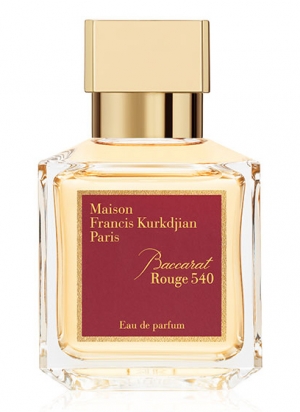
This accord reminds me of Absolue Pour Le Soir by Maison Francis Kurkdjian. It also features the famous civet, but in a more classic interpretation. Sauvage Extrait takes this idea and runs it through a rock aesthetic. The result is a bolder, more electric version.
Instead of velvety depth, we hear a chime and vibration. The civet here is not hidden but pushed to the forefront. Yet thanks to synthetic processing, it doesn't smell dirty. On the contrary, it acquires an almost metallic sheen that perfectly matches the overall rebellious mood.
Powdery and Creamy Notes
In addition to animal warmth, the heart features powdery and creamy nuances. They soften the overall aggression and make the fragrance more voluminous. The powder here is not cosmetic; it's more like talc after a shower. The creaminess recalls moisturizer or milk foam.
Together, this creates a dense texture that feels almost tangible. The fragrance seems to have weight, yet remains fluid. Such a combination is rare, and it's precisely what makes Sauvage Extrait memorable.
Synthetics as Architecture: A Bottomless Base
When people talk about synthetics in perfumery, they often mean something flat and cheap. But Sauvage Extrait flips that idea. Here, synthetic materials act as building blocks, creating volume, longevity, and unexpected textures. The fragrance's base is built on resinous woody accords reminiscent of oud and desert smoke.
But unlike traditional oud fragrances, there is no natural resin here. Instead, synthetic molecules deliver the same sensation of depth but with a brighter, almost electric sonority. This is not a fake; it's a new interpretation of Oriental motifs.
Oud Accord and Desert Smoke
You could compare this base to Aqua di Parma Oud or L'Air du Desert Marocain. Sauvage Extrait has something of both: elegance and austerity. The oud here is not animalic but smoky, with hints of aged wood. Yet thanks to synthetics, it comes across cleaner, without any dirty nuances.
Combined with civet and licorice, this woody base creates the effect of a desert mirage. It draws near, then recedes, playing with your perception. It's this very mutability that keeps the fragrance so alive for hours on end.
- The highest level of synthetic architecture
- An unexpected and delicate floral accord within
- Longevity and sillage that are hard to ignore
- Requires courage and leaves no room for dosing errors
- May come across as too sterile for lovers of natural notes
Why Synthetics Aren't a Bad Thing
Synthetic materials are often accused of lacking soul. But in Sauvage Extrait, they become a source of inspiration. They allow the perfumer to push beyond nature's limitations and craft textures that are impossible in natural perfumery. It's like using electric instruments in music — they expand the palette of sounds.
Rather than copying nature, synthetics here craft a reality of their own. They allow a fragrance to be simultaneously cool and warm, animalic and sterile, aggressive and tender. This perspective shows that modern perfumery isn't divided into natural and chemical — but into talented and dull.
| Aspect | Traditional view | Sauvage Extrait approach |
|---|---|---|
| Function of synthetics | Cheap substitute for natural notes | A tool for creating volume and textures |
| Perception | Flat, cold | Deep, multidimensional |
| Role in the composition | Secondary | Architectural, leading |
This table simplifies the picture, but the essence is clear. Synthetics can be art when guided by a master. In Sauvage Extrait, it doesn't hide; it becomes the main character. And this character, oddly enough, makes us feel.
- Apply the fragrance to clean skin, preferably the inner elbow.
- Wait ten minutes for the initial burst to settle.
- Listen to the heart after an hour, when the scent becomes closer.
- Compare your feelings with the first impression.
- Licorice (icy, glassy)
- Camphor (green, medicinal)
- Isobutylquinoline (sharp, metallic)
- Civet (sunny, pseudo-animalic)
- Oud accord (smoky, synthetic)

Don't expect comfort from Sauvage Extrait. This fragrance makes your sense of smell work at full capacity, revealing new details with every approach. For me, it's one of Dior's boldest releases in recent years.
It's best worn not as an everyday scent but as a special tool when you want to make a statement. And remember: a few sprays are enough to create a powerful sillage.
Why not let synthetics be honest? In an era when niche and mass-market are swapping places, Sauvage Extrait holds a unique position. It's loud, yet not vulgar. Synthetic, yet alive. This is a fragrance for those who aren't afraid to step out of their comfort zone and embrace the challenge of modern perfumery. And one detail: for all its power, it remains surprisingly enveloping.


