
The History of Perfume Bottles: Evolution of Design and Style
The author of this article is a renowned fragrance expert with over a decade of experience in the industry. With a passion for fragrances and a discerning palate, the author has written extensively on the art of perfumery for various publications.
The bottle rarely gets as much attention as the fragrance inside. And that's a shame. Long before the perfumer finalizes the formula, someone is already designing the shape in which this scent will meet the person.
The history of perfume bottles tells how a utilitarian vessel turned into an object of art. An alabaster pot from ancient Egypt and a glass torso on a perfume store shelf are connected by a thread spanning thousands of years.
Ancient vessels: how fragrances were preserved before glass
The first containers for aromatic oils appeared long before our era. Egyptians used alabaster, a stone that stays cool and barely lets light through. Oils with rose, lotus, or frankincense remained more stable in such vessels.
The shape was not just decorative. A narrow neck slowed evaporation, and a tight lid protected the composition from the desert heat.
As early as the fourth millennium BCE, Egyptian craftsmen adopted glassmaking techniques from their Mesopotamian neighbors and began making vessels using the core-formed method.
Glass of Phoenicia and Egypt: an accident turned into a craft
Legend attributes the discovery of glass to Phoenician sailors who built a fire on a sandy beach. The heat melted natural soda and sand, creating a viscous glassy mass.
Either way, it was the Phoenicians and Egyptians who perfected glassmaking as a craft. Vessels were decorated with colored threads, stripes, and waves, and the bottle began to speak about the owner's status.
Wealthy burials often contained such bottles as part of the afterlife dowry. Scent was considered a passport to eternity, and its vessel was valued no less than jewelry.
Rome and trade routes: the bottle becomes a commodity
The Romans inherited Phoenician techniques and scaled up glass production to an industrial level. Glassblowing, an invention around the first century BCE, dramatically reduced costs.
Fragrance bottles spread across the empire alongside oils, spices, and wine. Scent transformed from a ritual attribute into an everyday trade item, and the bottle became packaging that could be transported by caravans.
Art Deco and the birth of the bottle as an independent art form
For centuries, the bottle remained secondary to its contents. The turning point came at the turn of the 19th and 20th centuries when perfumery met jewelry art.
The Art Deco era brought a taste for pure geometry and mass production. Glass ceased to be just a container and became a field for sculptors who worked with volume, light, and facets.
René Lalique: the jeweler who became a glassblower
René Lalique started as an Art Nouveau master, creating jewelry from enamel and semi-precious stones. But from the 1890s, glass increasingly captivated him—a material more democratic than gold, yet as malleable as wax.
By the 1920s, Lalique's style had radically changed. The intricate plant lines of Art Nouveau gave way to the strict geometry of Art Deco: symmetry, relief figures, clear contours.
Lalique patented a technology that allowed bottles to be produced in series rather than individually. That sounds prosaic, but it made designer bottles affordable beyond just the aristocracy.
Alliance with François Coty: luxury is no longer a rarity
In 1908, the paths of Lalique and perfumer François Coty crossed. Coty wanted his fragrances sold in vessels worthy of their contents, but at a price accessible to more than just duchesses.
Lalique designed for him the Ambre Antique bottle, then dozens of other shapes. By the 1920s, he had designed about three hundred bottle models, eighty of which were produced under his own name.
Their collaboration turned the bottle into a separate advertising argument: the buyer chose a scent and, at the same time, an object they wanted to keep on their vanity.
Legendary bottles: three shapes the world remembers
By the mid-20th century, the industry had gathered enough courage to create manifesto bottles. Three of them became almost iconic.
They share one thing: the shape is recognized before the name on the label is read. Each bottle became a short statement about what the fragrance inside should be.
Chanel No. 5: a manifesto of minimalism
In 1921, when competitors were vying for extravagance in glass, Coco Chanel proposed the opposite: a strict rectangular bottle without a single unnecessary curve. The shape resembled a whiskey flask and the Parisian architecture of Place Vendôme.
A simple label, a beveled cap, minimal decoration. This bottle entered the permanent collection of the Museum of Modern Art in New York in 1959. A rare case where packaging was recognized as a design work on par with sculpture.
The "Bee" bottle of Guerlain
As early as 1853, the Guerlain perfume house created the Eau de Cologne Impériale bottle for Empress Eugénie. The glass with a honeycomb relief was adorned with sixty-nine gold bees, the symbol of the Napoleonic empire.
Isn't it amazing that an ornament from a century and a half ago is still instantly recognizable? The bee bottle outlived both the empire and fashion, remaining the house's signature.
Jean Paul Gaultier's torso: provocation as marketing
In 1995, Jean Paul Gaultier released Le Male in a bottle shaped like a male torso in a striped sailor shirt. The bottle challenged conventional ideas of masculinity in perfumery. And instead of a strict box, it was packaged in a tin can reminiscent of a food can.
The move was risky. But that very risk made the bottle one of the most recognizable silhouettes in men's fragrances.
| Bottle | Year | Shape Concept |
|---|---|---|
| Ambre Antique (Lalique for Coty) | 1910 | Art Deco for mass production, antiquity symbolism |
| Chanel No. 5 | 1921 | Strict rectangle instead of decorative glass |
| Guerlain, "bee" bottle | 1853 | Imperial symbol, honeycomb glass relief |
| Jean Paul Gaultier Le Male | 1995 | Male torso, provocation as a statement |
The table shows a spread of nearly a century and a half. Yet the logic for all four is the same: the bottle's shape should complete what the fragrance didn't get to say.
The bottle as a marketing tool and a work of art
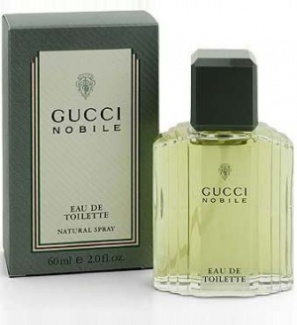
The bottle's shape works before a person even gets to smell the fragrance. On the shelf, a purchasing decision is often made visually, in seconds.
That's why brands invite architects, sculptors, and industrial designers. The bottle becomes a limited edition, a collectible, a reason for a separate exhibition at a museum of decorative arts.
- vintage Lalique glass or early Guerlain releases appreciate over time
- each piece bears traces of handwork and the authentic history of its era
- such a bottle becomes a standalone decorative object, not just a container
- old glass is fragile, and ground stoppers often stick and crack
- the market is flooded with replicas, and authenticity can be hard to verify
- residues of old fragrance inside deteriorate over time and create unpleasant deposits
Collectors know this balance by heart and still hunt for rare shapes. The value here is not in the content but in the vessel itself as a witness to its era.
Sometimes the bottle outlives the fragrance. The composition was discontinued long ago, but collectors continue to hunt specifically for the glass at flea markets and auctions.

The bottle is the first handshake between a fragrance and a person. Even before inhaling, we decide whether we trust this story or not.
The strongest examples in perfumery history are when shape and scent tell the same story, rather than arguing with each other.
Where bottle design is heading today
Modern packaging lives under the pressure of two forces: the desire to surprise and the need to be more responsible to the planet. The industry seeks a balance between spectacle and materials that won't sit in landfills for centuries.
The buyer has also changed. They increasingly ask what the bottle is made of and whether it can have a second life, not just how the contents smell.
Eco-packaging instead of excessive decoration
Heavy glass, metal weights, and multi-layered boxes are gradually giving way to recycled glass and lightweight constructions. Brands calculate the carbon footprint of packaging as carefully as the composition of the fragrance itself.
Designers learn to achieve expressiveness without extra mass. Textural play, frosted glass, and precise faceting replace heavy overlays and gilding.
Refills: a second life for a beloved bottle
Refill systems allow buying one beautiful bottle once, then replenishing it with concentrate in simpler packaging. This changes the psychology of purchase: the bottle becomes a durable item, not disposable packaging.
For brands, it's also a way to keep the customer close for the long term. Once choosing a beautiful vessel, a person returns for concentrate again and again.
- refills reduce the amount of glass and plastic per customer over years of using a fragrance
- recycled glass and biodegradable inserts replace some heavy decorative elements
- minimalism returns, but not as cost-cutting—as a conscious brand choice
Though aesthetics change, the essence remains: the bottle still promises a story before the cap is opened. Only the materials and rules of the game change, not the care for the vessel holding the fragrance.


