


Pheromone perfume: can fragrances increase attractiveness?
The word "pheromones" sells better than almost any other in perfumery. The bottle promises glances o...


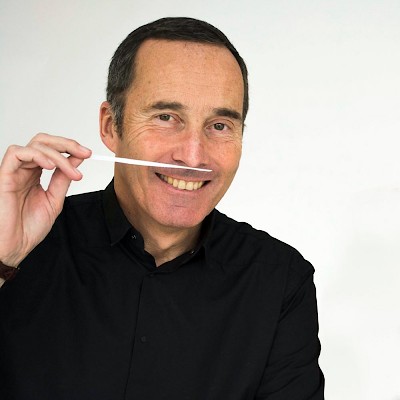
If there is room for an anarchist in perfumery, his name is Christopher Brosius. This independent American perfumer became a legend not because of bottles with gold caps, but in spite of them. By founding the cult brands Demeter and CB I Hate Perfume, he challenged the entire industry, proving that perfumes can smell not only of flowers and amber, but also of wet stone, freshly cut grass, and even the atmosphere of a laundry room.
Born and raised in Colombia, Brosius set out to conquer New York in the mid-1980s to study architecture. Fate had other plans: working in the cosmetics department at Barney's, and then at the legendary Kiehl's, where he first immersed himself in the world of fragrances, became his true calling. It was here, having risen to the position of creative director, that he realized the gap between commercial perfumery and what fragrance could really be.
In 1996, together with Christopher Gable, he created Demeter, a brand manifesto. Its philosophy was simple and radical: one fragrance, one idea, one pure image. Brousie turned what was previously considered impossible or unthinkable into perfume. The collection took the market by storm: these were not compositions, but photographs in scent. His best creations of that period, such as the melancholic and pure Snow, the juicy Tomato, and the cozy Apple Pie, became style icons. The fragrances Honeysuckle, Laundromat, and the playful Cosmopolitan Cocktail still top fan ratings for their absolute recognizability and emotionality. The success was also recognized by the industry—Snow received the prestigious Fragrance Foundation Award.
But a real rebellion was brewing inside. Working as a taxi driver in his youth, when he was forced to inhale a mixture of his passengers' cheap perfumes for hours on end, shaped his credo. In 2004, after leaving Demeter, he founded CB I Hate Perfume — a brand statement. The name is not a provocation, but honesty. Brosius created fragrances not "to please," but as personal memories, sensations, and states of mind. His signature style is hyper-realistic, almost meditative accords. The masterpiece of this period is considered to be #0162 Wet Stone — a cold, mineral, mesmerizing scent of stone after rain.
Brosius' unique vision attracted other creators. In 2005, he created his first famous perfume for a celebrity — a fougère composition for the eccentric Broadway actor Alan Cumming. His talent was also in demand for niche projects such as the mystical Black Phoenix Alchemy Lab, the elegant Berkeley Square (BSQ), and the luxurious Giorgio Valenti. Each collaboration proved that his language of fragrances is universal for those seeking depth rather than labels.
Today, Christopher Brosius, who lives and works in Williamsburg, Brooklyn, is not just a perfumer. He is a philosopher of scent. He didn't create just another floral bouquet; he created a new genre. His fragrances, whether the nostalgic Christmas Tree or the tropical Banana Flambee, are an invitation to rediscover the world around you. Fans often write in reviews that his creations are "perfumes for the soul," and it's hard to argue with that. Christopher Brosius has forever changed the landscape of perfumery, proving that the strongest scent is a pure, unadulterated emotion.
The word "pheromones" sells better than almost any other in perfumery. The bottle promises glances o...
Summer puts perfume to the test. In the heat, even your favorite fragrance can sound different: some...
You spritzed your favorite perfume in the morning, but by evening your skin smells like a different ...
Join the Fragsi community and get access to all its features