





-
 ¯\_(ツ)_/¯...

Musk in perfumery — history, best perfumes, perfumers, pairings
What is white musk
White musk is a synthetic perfumery note that has become the foundation of countless modern fragrances. Unlike its natural predecessor, it has a pure, soft, and velvety sound, devoid of sharp animalic qualities. This note serves as an ideal base that unifies the composition, adding longevity, tenderness, and a light leathery sensuality. Studying white musk is key to understanding all of modern perfumery, from airy floral bouquets to dense oriental trails.
Characteristics and olfactory profile
White musk belongs to the musk olfactory group. Its aroma is often described as pure, fresh, slightly soapy, with hints of laundered linen, warm skin, and a barely perceptible powderiness. It is surprisingly multifaceted: depending on the composition, it can reveal floral, fruity, or balsamic facets. In the perfume pyramid, it shows amazing flexibility, working as a light top note, a voluminous middle note, and a long-lasting base note, significantly increasing the diffusiveness and durability of perfumes.
Origin and synthetic nature
Modern white musk is entirely a creation of chemical science, unrelated to natural animal-derived musk. Molecules such as galaxolide, exaltolide (or romandolide), and helvetolide form its basis. It is the mixture of galaxolide and helvetolide that has secured the name "white musk." Their synthesis is not only ethical but also allows for a stable, pure, and predictable sound that perfumers, such as Olivier Polge or Alberto Morillas, value for its versatility.
Popular fragrances with white musk
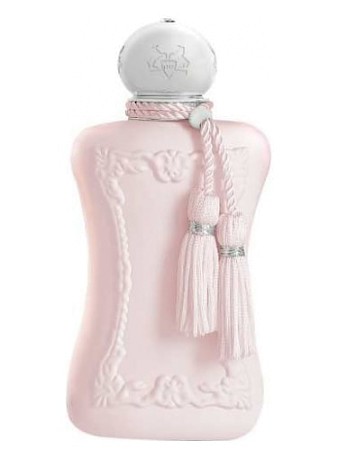
White musk is the invisible hero present in the formulas of most perfumes, but some fragrances elevate it to star status. These include the delicate and rosy Parfums de Marly - Delina, the sensual and coffee-infused Montale - Intense Cafe, as well as a classic in a modern interpretation — Chanel - №5 L'Eau. It forms the clean base in Dior - Miss Dior Blooming Bouquet and adds soft sensuality to Gucci - Gucci Guilty Woman.
What notes pair with white musk
The versatility of white musk lies in its ability to harmonize with almost any chord. It perfectly softens and envelops floral cores, adds warmth to woody and ambery bases, and refreshes citrus starts. Classic partners are considered rose, jasmine, vanilla, sandalwood, and patchouli. Similar functional synthetic notes are Ambrettolide with its fruity-musky hue or the softer Ambreton.
History and significance in perfumery
The emergence of synthetic white musks in the mid-20th century revolutionized perfumery, freeing perfumers from dependence on expensive and ethically controversial natural raw materials. Masters such as Jean-Claude Ellena began using them to create transparent, "leathery," and intellectual chords. Today, without this note, it is impossible to imagine any line from mass-market to niche houses, from Zara to Guerlain.
How to choose a fragrance with white musk
Fragrances with a dominant white musk are an ideal choice for those seeking a clean, soft, and unobtrusive perfume for daily wear. They are suitable for almost everyone, regardless of age and style, and surprisingly versatile in terms of seasonality: fresh ones for spring and summer, warmer and denser ones for autumn and winter. When choosing, pay attention to how the musk interacts with other notes: in a duet with flowers, it will create an image of tenderness, and with wood and amber, an image of cozy, warm sensuality.