




Shalimar: the history of the first amber fragrance
There are fragrances that smell like perfume. And then there are those that smell like a legend. Sha...


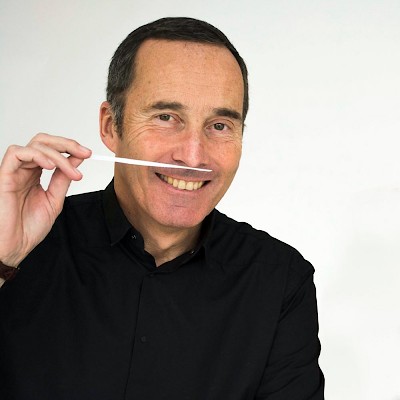
Martin Gras is a name known to every true perfume connoisseur. A Dutch perfumer who went from being a passionate chemist to the creator of iconic fragrances, he has left an indelible mark on the history of scents. His career is a story of how a scientific approach meets boundless creative imagination, giving birth to perfumes that become bestsellers and objects of adoration for millions.
While studying chemistry at the University of Amsterdam, Martin Gras could hardly have imagined that he would become a perfumer. However, his passion for fragrances led him to the legendary Roure Bertrand Dupont school (now the Givaudan school), a breeding ground for the world's greatest "noses." Starting his professional career at Dragoco (later part of Symrise), he went through the classic school, honing his skills in creating harmonious compositions.
Grasy's first resounding success came in the mid-1980s, and his name became forever associated with benchmark men's fragrances. It was during this period that he created his iconic works for leading fashion houses. For Ted Lapidus, the perfumer created the charismatic Lapidus Pour Homme, which many still consider a legend of olfactory art. For Cerruti, he created the elegant and fresh 1881 Pour Homme, and for Pierre Cardin, the marine and energetic Bleu Marine Pour Lui. These fragrances were not just sold — they shaped the image of the successful man of an entire era.
In the 1990s, Martin Gras's signature style became even more multifaceted. He proved that he was not only capable of creating classic men's chypres, but also sensual women's compositions. The master's portfolio was expanded with the bright Dalimix for the surrealist brand Salvador Dali and the sunny Daylight for Argentine tennis player and businesswoman Gabriela Sabatini. And the iconic fragrance Popy Moreni For Women proved that skill can turn even mass-market perfumes into objects of desire.
The peak of Grasse's career and his most talked-about works were perfumes for the fashion rebel Vivienne Westwood. In 1998, the world saw the bold, powdery-musky Boudoir, which became the embodiment of luxurious decadence. It was followed by the equally provocative fruity-chypre Libertine. These fragrances revealed the main feature of the perfumer's style — the ability to balance on the edge of classicism and shock value, creating complex but incredibly attractive compositions.
After creating modern hits such as the daring 30cc and the elegant CC for Chevignon, as well as the woody-spicy Bogner Wood Man for the Bogner ski brand, Martin Gras took a creative break. He returned only in 2012 to present his latest works to the world: the sporty Bogner Sports Team 36 and the exotic Abu Dhabi AUH for the conceptual project The Scent of Departure, after which he announced his retirement.
Today, Martin Gras's fragrances live on, are discussed, and inspire others. From the legendary Cerruti 1881 Serie Limitee to the niche Amouage, each of his works was meticulously crafted. His legacy is not just a list of fragrances, but an entire encyclopedia of style, proving that true perfumery can be both commercially successful and artistically flawless. For the community of connoisseurs, Martin Gras will forever remain a master whose creations have stood the test of time.
There are fragrances that smell like perfume. And then there are those that smell like a legend. Sha...
Every era has its own scent. Not literally, but in how it felt: what it wanted, what it feared, what...
There are fragrances that are recognized by just their trail in an elevator. Baccarat Rouge 540 is o...
Join the Fragsi community and get access to all its features